
Feeling stuck in a style rut? This guide shows you how to accessorize outfits with jewelry that transforms everyday look...
Imagine a garden blooming not from soil, but from a simple cloth, its flowers spun from vibrant silk threads. This is the magic of Phulkari embroidery — the traditional textile art of Punjab, where every stitch tells a story, and every motif breathes life into fabric.
What is Phulkari? It's more than just embroidery. Derived from the Punjabi words "phul" (flower) and "kari" (work), this traditional Indian craft is a centuries-old floral embroidery style from the Punjab region of India and Pakistan. Known for its bold colors, striking patterns, and cultural depth, Phulkari is a symbol of heritage and graceful living.
What makes this craft especially fascinating is its enduring charm. In today’s world of fast fashion, Phulkari stands tall as a handcrafted treasure, cherished by artists, designers, and culture lovers. For fashion-forward souls in the UAE, Phulkari adds a touch of refined South Asian elegance to modern wardrobes. Learn more about blending tradition and trend in our Indo-Western Fusion Wear guide.
In this guide, we’ll explore the origins, techniques, types, and contemporary styling of Phulkari embroidery — offering you a deep dive into this beautiful heirloom craft and how you can incorporate it into your lifestyle.
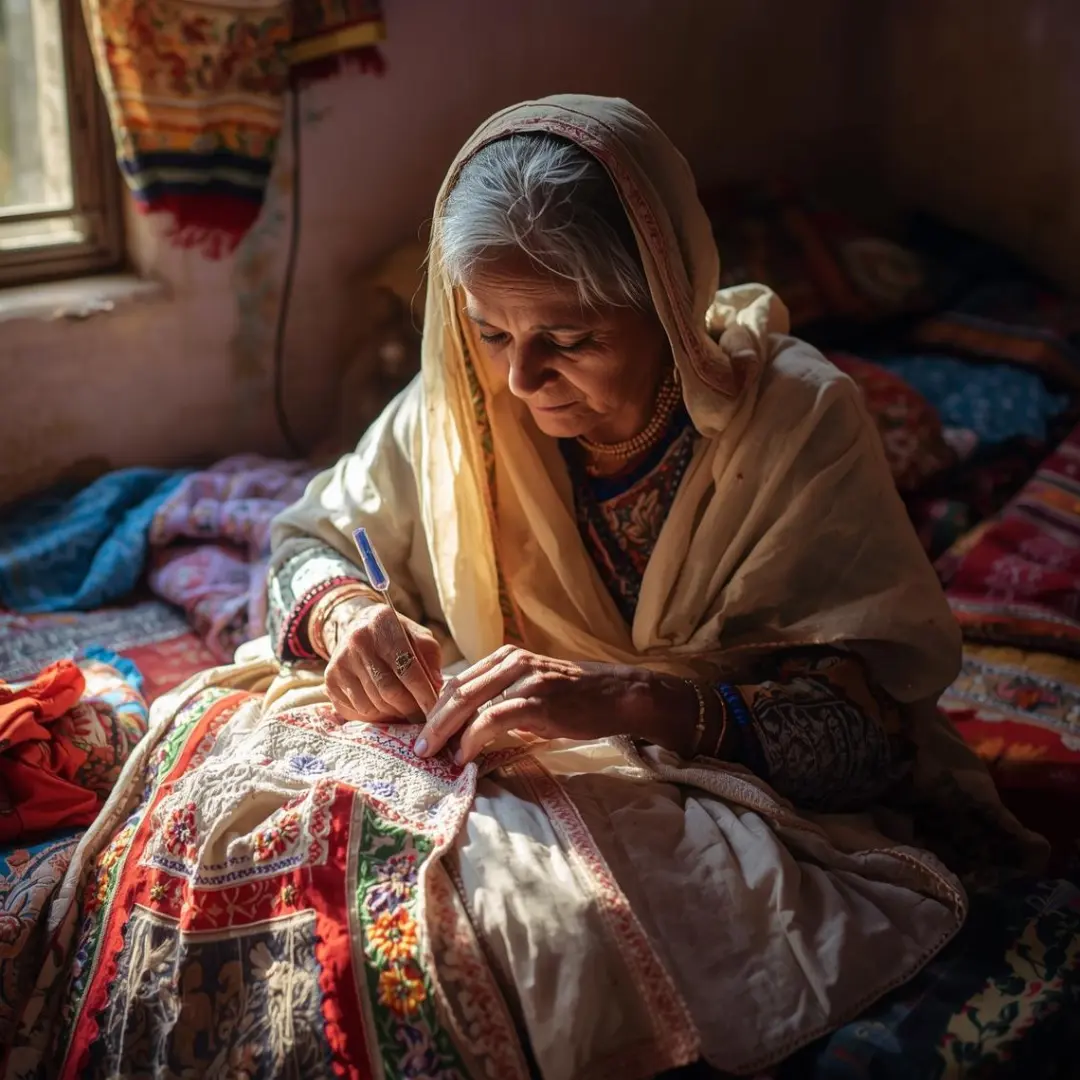
Phulkari began as a domestic art among women in Punjabi villages, passed down from mothers to daughters. These were not commercial items; they were labors of love — handmade pieces stitched during quiet moments, often intended for a daughter’s wedding or special occasions.
Two iconic forms, the Bagh and the Chope, were essential in a bride’s trousseau. The Bagh, meaning "garden," represented abundance, while the Chope was a ritualistic gift from the maternal grandmother, symbolizing blessings and continuity. Each piece was more than fabric and thread; it was a woven diary — rich with stories, seasons, dreams, and family emotions.
Emerging from undivided Punjab, Phulkari holds a shared heritage for both India and Pakistan. Across borders, the vibrant threads bind memories of home, culture, and togetherness. Discover more about the cultural significance of Indian clothing in the modern context.
The Partition of India in 1947 disrupted many cultural practices, including traditional Phulkari making. As families migrated, the art declined, becoming a nostalgic relic of pre-Partition Punjab. But with displacement came diaspora — leading to a longing for roots, and eventually, a revival.
Today, traditional Indian crafts like Phulkari are being rediscovered and celebrated. Designers have embraced it, and global fashion runways have witnessed its resurgence. It is no longer just memorabilia; it’s a statement of identity and pride.
Thanks to artisan cooperatives and conscious fashion houses, Phulkari is reconnecting younger generations with their cultural roots — in India, Pakistan, and even the cosmopolitan streets of Dubai and Abu Dhabi. See how sustainable fashion in the UAE integrates heritage arts like Phulkari.

Traditional Phulkari embroidery starts with khaddar or khadi — handspun and handwoven cotton fabric. These earthy-toned canvases, whether red, indigo, or black, form the perfect backdrop for vibrant embroidery, allowing colors to burst forth vividly.
The thread used is pat — a glossy, untwisted silk floss sourced from Kashmir. Its sheen and texture give Phulkari its signature brilliance. The colors speak their own language: red embodies love and marriage; orange may evoke celebration; green reflects nature and renewal.
These are not just design choices. They're visual poetry, coded with centuries of meaning in every hue and stitch.
At the heart of Phulkari is the darn stitch, executed on the reverse side of the fabric. Despite being done from memory — without traced patterns — these stitches form symmetrical designs on the front. It’s a technique that demands both mental mapping and artistic intuition.
Every motif has its origin in everyday village life, making it a humble yet rich art form. Common motifs include:
The beauty lies in the balance — between pattern and canvas, between spontaneity and precision.

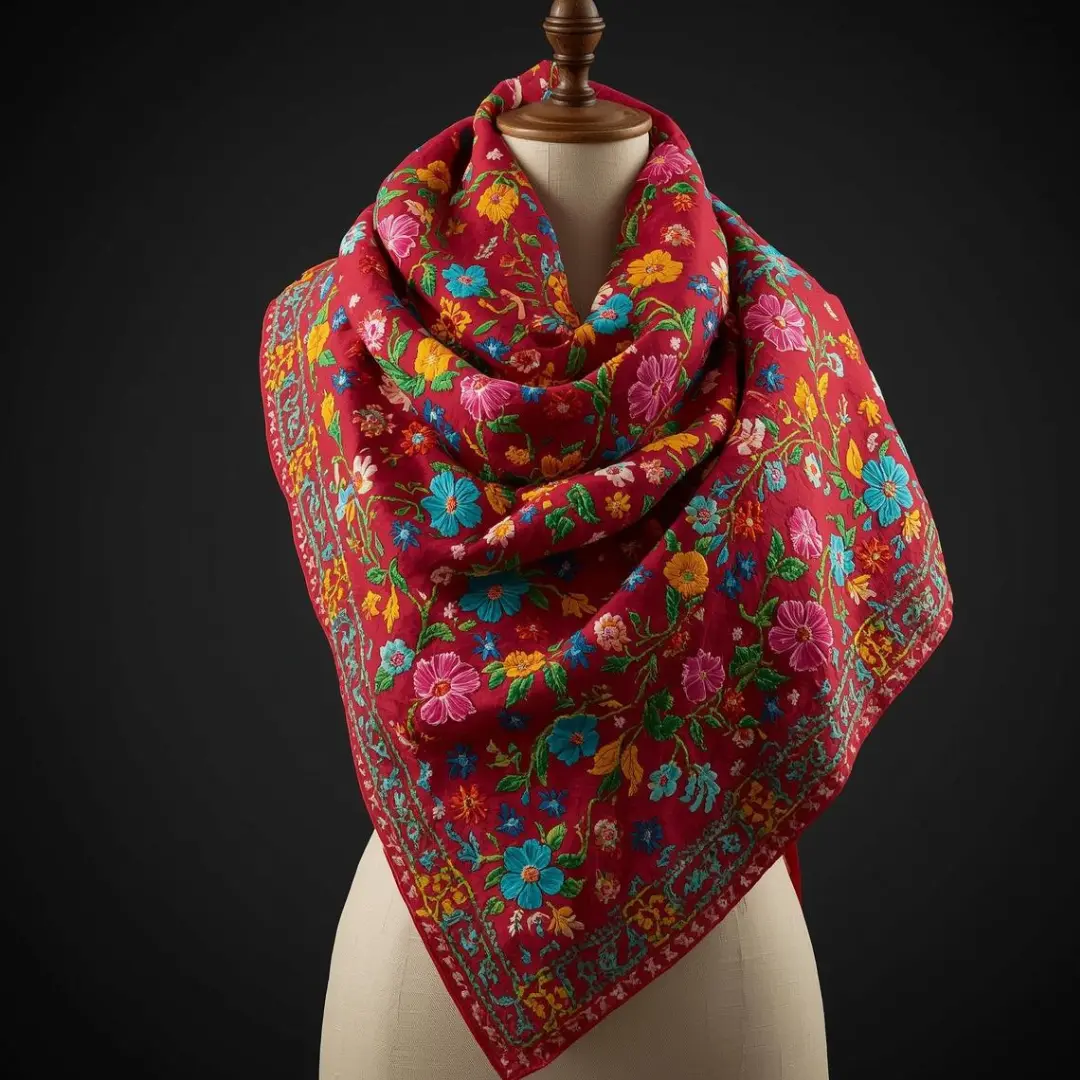
Bagh Phulkari is the crown jewel — dense, lush embroidery where the base fabric disappears under the spell of colorful threads. It’s typically reserved for weddings, worn as shawls during ceremonies.
There are striking variations within Bagh:
Creating a Bagh takes months and immense patience. But the result? A living tapestry of tradition, worth every stitch.
Every Punjabi bride treasures her Chope — a double-sided Phulkari embroidered in golden or maroon silk thread on a red base, gifted by the maternal grandmother. It is worn during pre-wedding rituals and kept as a divine blessing for life.
The Subhar, another bridal essential, is slightly different. It features a central motif and decorative designs in all four corners. Worn on the wedding day, it represents the sacred union and traditions passed across generations.
Thirma is a dignified style traditionally worn by older women or widows. Embroidered on white khadi, it conveys simplicity and spiritual purity, making it unique among its colorful counterparts.
Sainchi Phulkari is perhaps the most narrative form. It features scenes from village life — wrestlers, farmers, animals, spinning wheels, wedding processions. It’s almost cinematic, capturing Punjab’s rural vibrancy in threads.
These story-rich variations remind us that Phulkari is not just about aesthetics — it’s about memory, culture, and community.

In the UAE’s cosmopolitan setting, Punjabi embroidery like Phulkari beautifully bridges heritage and high fashion. Here’s how to wear it with flair:
The possibilities are endless — you can embrace heritage without sacrificing modern style.

Owning Phulkari means owning a piece of living history. To ensure it lasts generations, treat it with the care it deserves:
Phulkari embroidery is far more than a decorative technique; it is a profound expression of Punjabi culture, womanhood, and tradition. It transforms simple khaddar into a canvas of bold colors and meaningful motifs, where every darn stitch carries the warmth of a mother's blessing and the vibrancy of village life.
In the global and fashion-forward landscape of the UAE, wearing Phulkari is an act of cultural pride and sophisticated style. Whether you choose the dense, celebratory Bagh, the dignified simplicity of Thirma, or incorporate its patterns into a modern accessory, you are carrying forward a vibrant thread of heritage.
Embrace Phulkari. It’s an investment in art, culture, and timeless elegance—a beautiful, wearable legacy for the modern world.
Ready to weave this heritage into your style? Explore Indobaz's exquisite collection of Phulkari-embroidered dupattas and fusion wear, designed for the discerning individual who cherishes tradition and contemporary flair.
Share:
Feeling stuck in a style rut? This guide shows you how to accessorize outfits with jewelry that transforms everyday look...

Discover expert laundry, drying, and storage tips that help make clothes last longer—saving money, reducing waste, and p...

Discover the essence of the quiet luxury trend—timeless elegance, minimalist design, and premium materials tailored for...
Struggling to juggle between work bags and weekend totes? Discover the best work-to-weekend bag styles for life in Dubai...